LI-7 Wenliu (溫溜) — Warm Flow
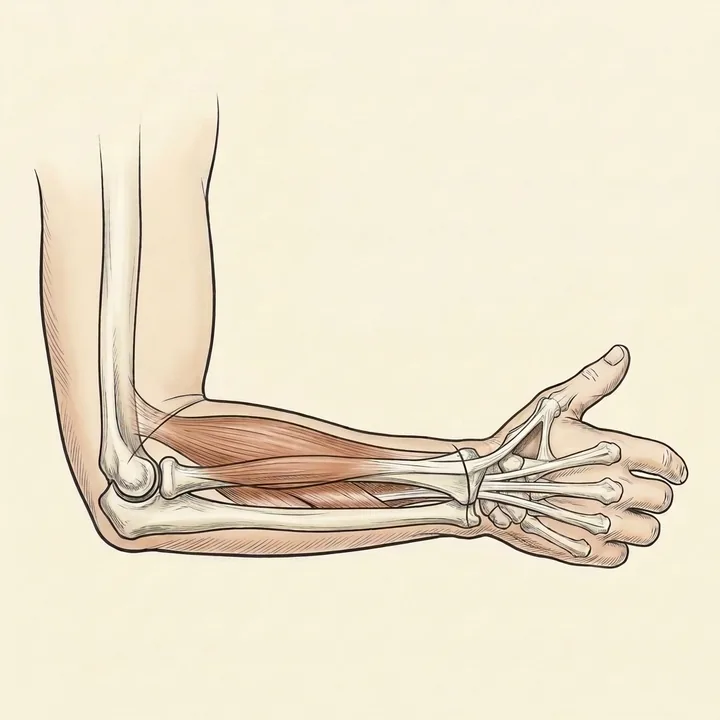
On the posterolateral aspect of the forearm, 5 cun proximal to LI-5, on the line connecting LI-5 and LI-11.
With the elbow flexed, locate the point 5 cun above Yang Xi (LI-5), on the lateral border of the radius.
Extensor carpi radialis brevis muscle, extensor digitorum muscle. Innervated by the lateral cutaneous nerve of the forearm and the deep branch of the radial nerve.
Perpendicular insertion, 0.5–0.8 cun.
Medical application & myofascial correlation
Clinical synthesis
Xi (Cleft) point of the Large Intestine Meridian, Hand Yang Ming. The Xi (Cleft) points of the Yang meridians are used to treat acute pain syndromes.
Clinical practice indications
- 01Acute glossitis
- 02Stomatitis
- 03Parotitis — local musculoskeletal pain in the radial forearm
Presenting symptoms & complaints
Classical tradition, channel actions & source
Classical therapeutic actions
- Clears Heat and detoxifies
- Harmonizes the Intestine and Stomach
- Clears the Yangming and calms the Shen
- Treats acute disorders
- Clears Heat and toxic Heat
- Regulates the Stomach and Large Intestine
Traditional indications (TCM)
Functional classification
Character etymology
Wen (温), to warm; Liu (溜), circulation. The point has the function of warming the meridian and promoting the circulation of Qi.
Layered tissue anatomy & needle biomechanics at LI 7
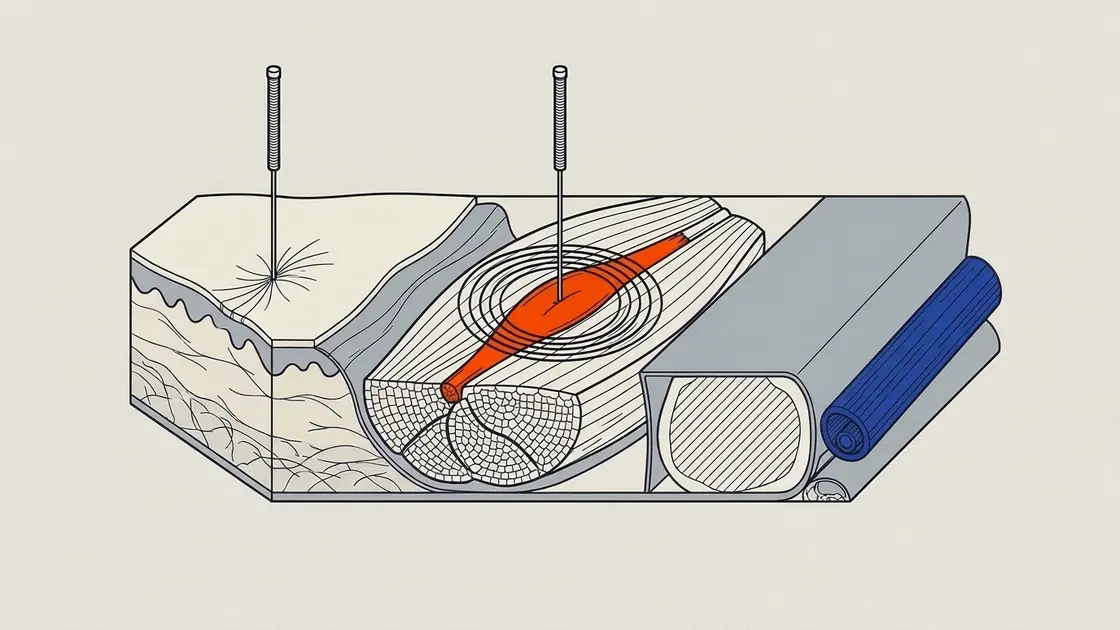
Cross-sectional technical schematic of perpendicular insertion (90°) (0.5–0.8 cun): superficial connective collagen coupling, intramuscular myofascial transduction, and deep neurovascular protection.
Dermal & fascial collagen coupling
A solid non-cutting filiform needle (0.25 mm rounded tip) enters via perpendicular insertion (90°), gently tenting loose areolar collagen fibers without slicing dermal vessels.
Myofascial spindle & Aδ / C transduction
Within the 0.5–0.8 cun target window at LI 7, mechanical coupling recruits intramuscular mechanoreceptors, increasing local micro-perfusion and releasing taut bands.
Deep neurovascular clearance
Calibrated angle and depth keep the needle tip clear of periosteum and deep neurovascular trunks, pairing targeted stimulation with anatomical safety.