GV-16 Fengfu (風府) — Wind Mansion
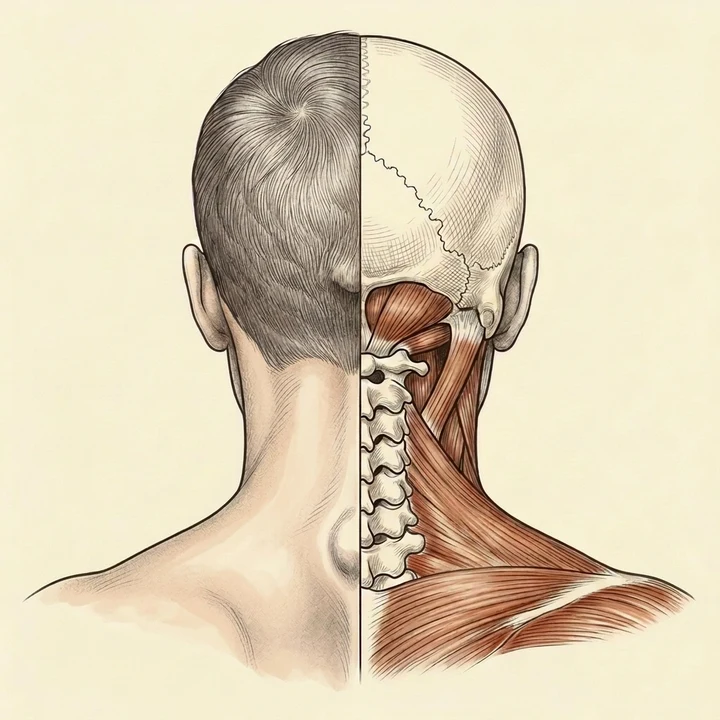
On the posterior region of the neck, directly below the external occipital protuberance, in the depression between the trapezius muscles, on the posterior midline.
With the person seated and the head slightly extended, relax the trapezius and identify the posterior midline. From the center of the posterior hairline, follow superiorly to the occipital bone. GV-16 lies in the depression immediately below the external occipital protuberance, between the origins of the trapezius muscles.
Nuchal ligament, between the trapezius muscles. The cisterna magna and medulla oblongata lie deep to this point.
Perpendicular insertion, directed strictly toward the patient's lower jaw, 0.5–1.0 cun.
Medical application & myofascial correlation
Clinical synthesis
This point is located where pathogenic wind attacks and possesses the property of eliminating it. Therefore, this point is important for treating the disorders mentioned. It belongs to the Du Mai and is a Crossing Point of the Foot Tai Yang and the Yang Wei Mai, with the property of resolving Biao (surface) syndromes and eliminating pathogenic wind.
Clinical practice indications
- 01Cerebrovascular accident (stroke)
- 02Hypertension
- 03Migraine
- 04Occipital neuralgia
- 05Epilepsy
- 06Common cold
Presenting symptoms & complaints
Classical tradition, channel actions & source
Classical therapeutic actions
- Eliminates Wind (principal point for internal and external Wind invading the head)
- Nourishes the Sea of Marrow
- Calms the spirit
Traditional indications (TCM)
Functional classification
Character etymology
Feng (風), pathogenic wind; Fu (府), place. A point for eliminating pathogenic wind.
Layered tissue anatomy & needle biomechanics at GV 16
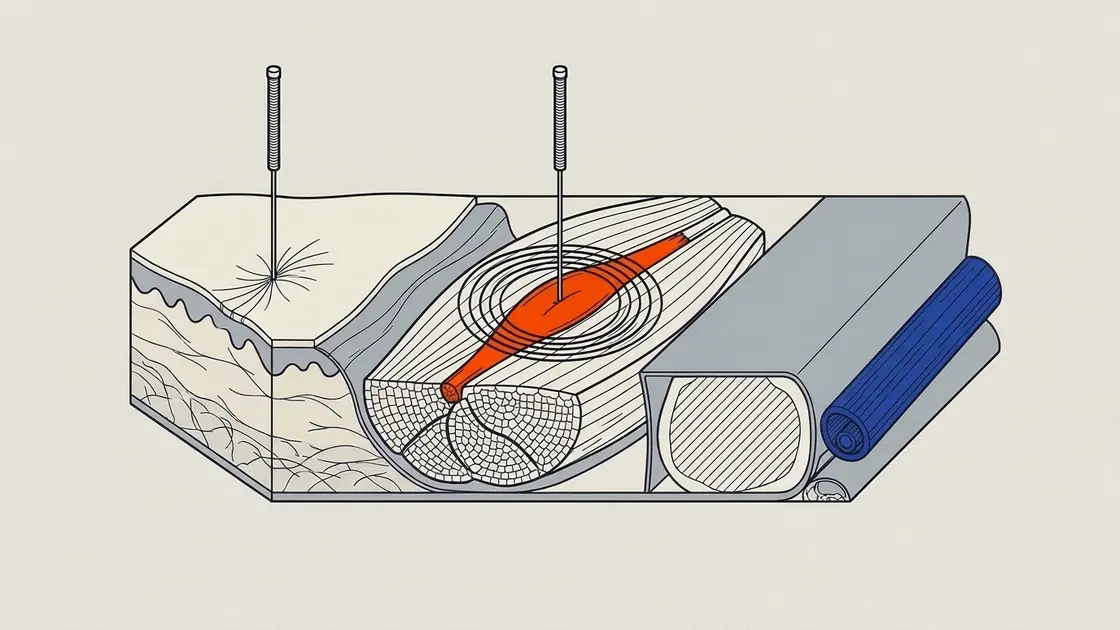
Cross-sectional technical schematic of perpendicular insertion (90°) (0.5–1 cun): superficial connective collagen coupling, intramuscular myofascial transduction, and deep neurovascular protection.
Dermal & fascial collagen coupling
A solid non-cutting filiform needle (0.25 mm rounded tip) enters via perpendicular insertion (90°), gently tenting loose areolar collagen fibers without slicing dermal vessels.
Myofascial spindle & Aδ / C transduction
Within the 0.5–1 cun target window at GV 16, mechanical coupling recruits intramuscular mechanoreceptors, increasing local micro-perfusion and releasing taut bands.
Strict anatomical safety floor
The deep fascial septum, bone cortex, and underlying neurovascular bundle or cavity define the strict anatomical boundary observed during physician needling at GV 16.
Clinical relations & channel protocols
Classical reference combinations
Immediate neighbors on the meridian
GV 16 in research
How many Library studies cite this point, since when, and with which designs and verdicts.
- Studies
- 1Library study cites GV 16
- By year
- 2026
- Verdict
- Strong1
- Study designs
- RCT1
- Classical source
- Ling Shu
- Depth
- 0.5–1 cunPerpendicular
Each study counts once, under the most specific design it states. The verdict is the Library’s word for the strength of each study’s evidence.
See the numbers: GV 16 in research
| Year | Studies |
|---|---|
| 2026 | 1 |
Often appears with
Points the Library studies cite together with GV 16. It shows research practice, not a prescription.
Each filled mark stands for 5 studies; an open mark, for 1 to 4.
Related clinical reading
6Understand GAD — one of the most common anxiety disorders, its neurobiological mechanisms, diagnosis, and evidence-based treatment options.
Understand tension-type headache — the most common headache, its mechanisms, how to tell it apart from migraine, and the most effective therapeutic approaches.
Everything about neck pain — causes, symptoms, diagnosis, and evidence-based treatment options.
Understand major depression — one of the most prevalent medical conditions in the world, its neurobiologic mechanisms, diagnosis, and evidence-based treatments.
Understand migraine — a complex neurological disease that goes far beyond a simple headache, its mechanisms, diagnosis, and evidence-based treatments.
Understand systemic arterial hypertension — the leading modifiable cardiovascular risk factor, its hemodynamic and neurohumoral mechanisms, diagnosis, and evidence-based treatments.