EX-B8 Shi Qi Zhui () — Shi Qi Zhui — Seventeenth Vertebra
Lumbosacral close-up: on posterior midline directly inferior to the L5 spinous process
Anatomical illustration acupuntura.com · verified against Focks (2008), WHO/WPRO (2008), and Pontos e Meridianos
Anatomical location
In the lumbar region, on the posterior midline, below the spinous process of the fifth lumbar vertebra. (Fig. 12.12)
Practical palpation guide
With the back flexed, locate the point below the spinous process of the fifth lumbar vertebra.
Comparison across atlases & standards
The lateral callout for Yaoyan in figure 12.12 repeats the abbreviation DL 3. Shiqizhui is the midline point below L5. Zhenjiuxue confirms the perpendicular approach at 0.5 to 1 cun. Chen Jing describes 1 to 1.5 cun. This atlas uses the team’s range for the L5–S1 junction.
Needling technique
In the depression below the L5 spinous process, Pontos e Meridianos describes perpendicular needling at 0.5 to 1 cun. It also permits moxibustion.
Medical application & myofascial correlation
Clinical practice indications
- 01Lumbosacral pain
- 02Enuresis
- 03Gynecological diseases
- 04Dysmenorrhea
- 05Metrorrhagia and pain along the spinal column
- 06The point can be used to treat pelvic inflammation and pain
Presenting symptoms & complaints
Classical tradition, channel actions & source
Traditional indications (TCM)
Functional classification
Layered tissue anatomy & needle biomechanics at EX-B8
Cross-sectional technical schematic of perpendicular insertion (90°) (calibrated depth): superficial connective collagen coupling, intramuscular myofascial transduction, and deep neurovascular protection.
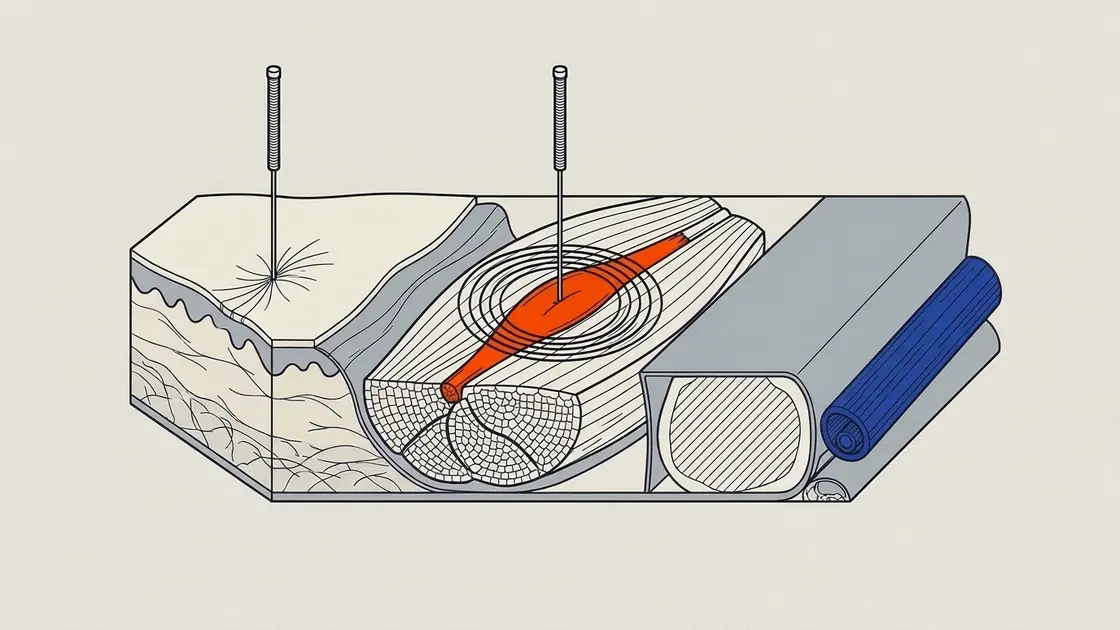
Dermal & fascial collagen coupling
A solid non-cutting filiform needle (0.25 mm rounded tip) enters via perpendicular insertion (90°), gently tenting loose areolar collagen fibers without slicing dermal vessels.
Myofascial spindle & Aδ / C transduction
Within the calibrated depth target window at EX-B8, mechanical coupling recruits intramuscular mechanoreceptors, increasing local micro-perfusion and releasing taut bands.
Strict anatomical safety floor
The deep fascial septum, bone cortex, and underlying neurovascular bundle or cavity define the strict anatomical boundary observed during physician needling at EX-B8.
EX-B8 in research
How many Library studies cite this point, since when, and with which designs and verdicts.
- Studies
- 1Library study cites EX-B8
- By year
- 2014
- Verdict
- Moderate1
- Study designs
- Narrative Review1
- Classical source
- Bei Ji Qian Jin Yao Fang
Each study counts once, under the most specific design it states. The verdict is the Library’s word for the strength of each study’s evidence.
See the numbers: EX-B8 in research
| Year | Studies |
|---|---|
| 2014 | 1 |