EX-LE9 Wai Huai Jian () — Wai Huai Jian — Tip of the Lateral Malleolus
At the ankle, on the highest prominence (tip) of the lateral malleolus
Anatomical illustration acupuntura.com · verified against Focks (2008), WHO/WPRO (2008), and Pontos e Meridianos
Anatomical location
At the most prominent part of the lateral malleolus at the ankle.
Practical palpation guide
On the outer ankle, locate the greatest prominence of the lateral malleolus.
Comparison across atlases & standards
China’s PMPH also contraindicates needling and permits moxibustion. Taiwan’s Yi Bian describes bloodletting as a variant. This atlas follows Pontos e Meridianos.
Needling technique
The textbook describes moxibustion over the prominence of the lateral malleolus and contraindicates needling.
Medical application & myofascial correlation
Clinical practice indications
- 01Toothache
- 02Sore throat and aphthous ulcers
Presenting symptoms & complaints
Classical tradition, channel actions & source
Traditional indications (TCM)
Functional classification
Layered tissue anatomy & needle biomechanics at EX-LE9
Cross-sectional technical schematic of perpendicular insertion (90°) (calibrated depth): superficial connective collagen coupling, intramuscular myofascial transduction, and deep neurovascular protection.
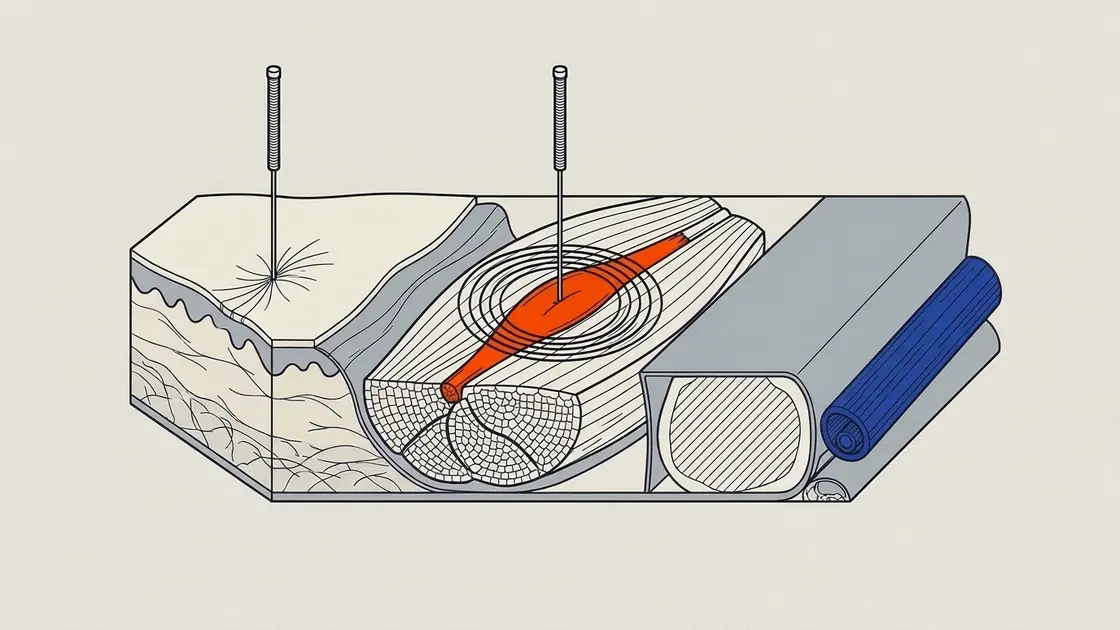
Dermal & fascial collagen coupling
A solid non-cutting filiform needle (0.25 mm rounded tip) enters via perpendicular insertion (90°), gently tenting loose areolar collagen fibers without slicing dermal vessels.
Myofascial spindle & Aδ / C transduction
Within the calibrated depth target window at EX-LE9, mechanical coupling recruits intramuscular mechanoreceptors, increasing local micro-perfusion and releasing taut bands.
Strict anatomical safety floor
The deep fascial septum, bone cortex, and underlying neurovascular bundle or cavity define the strict anatomical boundary observed during physician needling at EX-LE9.