EX-CA1 Zi Gong () — Zi Gong — Uterus
Anatomical location
On the anterolateral aspect of the pelvis, 4 cun below the umbilicus and 3 cun lateral to Zhong Ji (CV-3). (Fig. 12.10)
Practical palpation guide
In the supine position, identify the anterior midline and the level of CV-3. The point is bilateral.
Needling technique
0.8 to 1.2 cun · perpendicular
Medical application & myofascial correlation
Clinical practice indications
- 01"Uterine prolapse"
- 02Infertility
- 03Metrorrhagia
- 04Menstrual irregularity
- 05Dysmenorrhea
- 06Low back pain and hernia symptoms
Presenting symptoms & complaints
Classical tradition, channel actions & source
Traditional indications (TCM)
Functional classification
Layered tissue anatomy & needle biomechanics at EX-CA1
Cross-sectional technical schematic of perpendicular insertion (90°) (0.8–1.2 cun): superficial connective collagen coupling, intramuscular myofascial transduction, and deep neurovascular protection.
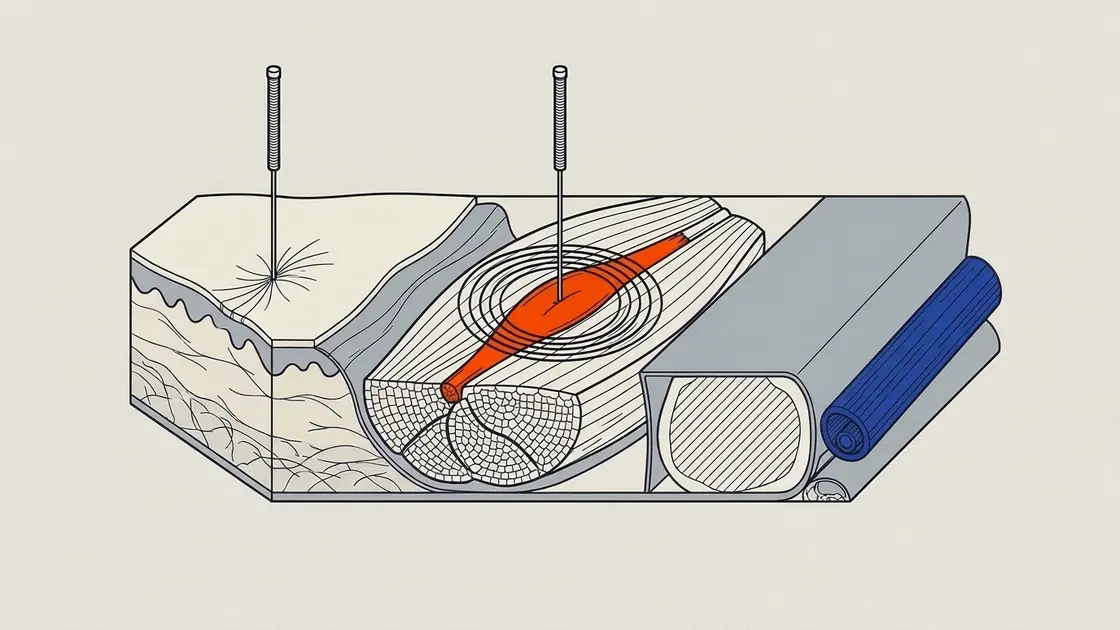
Dermal & fascial collagen coupling
A solid non-cutting filiform needle (0.25 mm rounded tip) enters via perpendicular insertion (90°), gently tenting loose areolar collagen fibers without slicing dermal vessels.
Myofascial spindle & Aδ / C transduction
Within the 0.8–1.2 cun target window at EX-CA1, mechanical coupling recruits intramuscular mechanoreceptors, increasing local micro-perfusion and releasing taut bands.
Deep neurovascular clearance
Calibrated angle and depth keep the needle tip clear of periosteum and deep neurovascular trunks, pairing targeted stimulation with anatomical safety.
Clinical trial protocols using this point
- studies cite this point
- 8 studies cite this point
- RCTs
- 2 RCTs
- sham-controlled
- 2 sham-controlled
Top clinical conditions tested
Most frequent synergistic partner points
Clinical Protocols & Trials Using This Point
Clinical conditions in our trial library where EX-CA1 ranks among the core protocol points (1 mapped protocols).
EX-CA1 in research
How many Library studies cite this point, since when, and with which designs and verdicts.
- Studies
- 8Library studies cite EX-CA1
- By year
- 20112026
- Verdict
- Strong1
- Moderate6
- Weak1
- Study designs
- Meta-analysis3
- Systematic Review1
- RCT2
- Clinical Guideline1
- Narrative Review1
- Classical source
- Zhen Jiu Shu Xue Tu Pu
- Depth
- 0.8–1.2 cunPerpendicular
Each study counts once, under the most specific design it states. The verdict is the Library’s word for the strength of each study’s evidence.
See the numbers: EX-CA1 in research
| Year | Studies |
|---|---|
| 2011 | 2 |
| 2017 | 1 |
| 2018 | 1 |
| 2024 | 2 |
| 2025 | 1 |
| 2026 | 1 |
Often appears with
Points the Library studies cite together with EX-CA1. It shows research practice, not a prescription.
- SP 66 studies in common
- CV 45 studies in common
- ST 362 studies in common
- BL 232 studies in common
- LI 41 study in common
- LI 111 study in common
- ST 251 study in common
- KI 71 study in common
Each filled mark stands for 5 studies; an open mark, for 1 to 4.