EX-LE7 Lan Wei () — Lan Wei — Appendix Point
Anterolateral lower leg, ~2 B-cun inferior to ST 36, one finger-breadth lateral to tibial crest
Anatomical illustration acupuntura.com · verified against Focks (2008), WHO/WPRO (2008), and Pontos e Meridianos
Anatomical location
On the anterolateral aspect of the leg, 2 cun below Zu San Li (ST-36) and one cun lateral to the anterior crest of the tibia. (Fig. 12.22)
Practical palpation guide
In the supine position, with the knee flexed, locate the point 5 cun inferior to Xi Yan (EX-LE5) (or 2 cun below Zu San Li (ST-36), 1 cun lateral to the tibia. Sensation of pain and paresthesia upon digital pressure.
Needling technique
perpendicular
Medical application & myofascial correlation
Clinical practice indications
- 01Intestinal infection
- 02Symptoms of acute uncomplicated appendicitis
- 03Epigastralgia
- 04Acute abdominal pain
- 05Indigestion and paralysis of the lower limb
Presenting symptoms & complaints
Classical tradition, channel actions & source
Traditional indications (TCM)
Functional classification
Layered tissue anatomy & needle biomechanics at EX-LE7
Cross-sectional technical schematic of perpendicular insertion (90°) (calibrated depth): superficial connective collagen coupling, intramuscular myofascial transduction, and deep neurovascular protection.
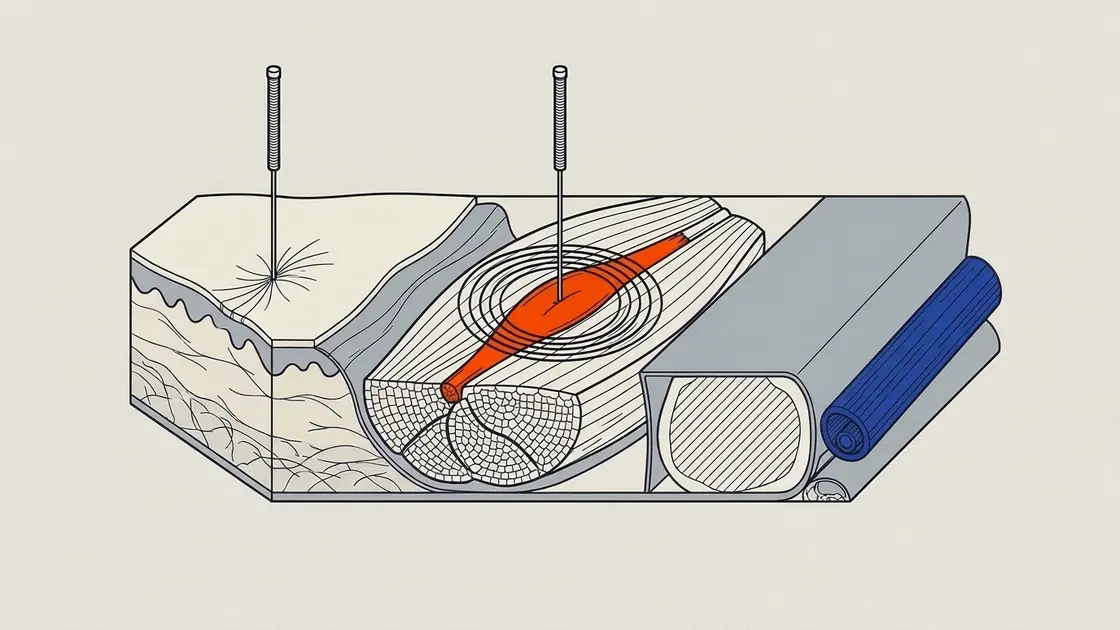
Dermal & fascial collagen coupling
A solid non-cutting filiform needle (0.25 mm rounded tip) enters via perpendicular insertion (90°), gently tenting loose areolar collagen fibers without slicing dermal vessels.
Myofascial spindle & Aδ / C transduction
Within the calibrated depth target window at EX-LE7, mechanical coupling recruits intramuscular mechanoreceptors, increasing local micro-perfusion and releasing taut bands.
Deep neurovascular clearance
Calibrated angle and depth keep the needle tip clear of periosteum and deep neurovascular trunks, pairing targeted stimulation with anatomical safety.