EX-HN15 Jing Bai Lao () — Jing Bai Lao — Hundred Labors of the Neck
Posterior neck, 2 B-cun superior to C7 (GV 14) and 1 B-cun lateral to the posterior midline
Anatomical illustration acupuntura.com · verified against Focks (2008), WHO/WPRO (2008), and Pontos e Meridianos
Anatomical location
On the nape, 2 cun above Da Zhui (GV-14) and 1 cun lateral to the posterior midline. (Fig. 12.9)
Practical palpation guide
Sitting with the head flexed, locate the point on the nape 2 cun above Da Zhui (GV-14) and 1 cun lateral to the posterior midline.
Comparison across atlases & standards
Figure 12.9 measures from GV 14, in the depression below the C7 spinous process. GB/T 40997–2021 uses the spinous process itself as the reference. PMPH confirms the textbook’s perpendicular course and range. Yi Bian also permits an oblique course, without specifying the direction. The distances from GV 14 and the midline locate the point on the surface.
Needling technique
Pontos e Meridianos describes perpendicular needling at 0.5 to 1 cun and permits moxibustion.
Medical application & myofascial correlation
Clinical practice indications
- 01Symptoms of tuberculosis
- 02Profuse sweating
- 03Lymphadenitis
- 04Cough and neck pain
- 05It is frequently used for occipital neuralgia
- 06Chronic bronchitis
- 07Whooping cough and symptoms of pulmonary tuberculosis
Presenting symptoms & complaints
Classical tradition, channel actions & source
Traditional indications (TCM)
Functional classification
Layered tissue anatomy & needle biomechanics at EX-HN15
Cross-sectional technical schematic of perpendicular insertion (90°) (calibrated depth): superficial connective collagen coupling, intramuscular myofascial transduction, and deep neurovascular protection.
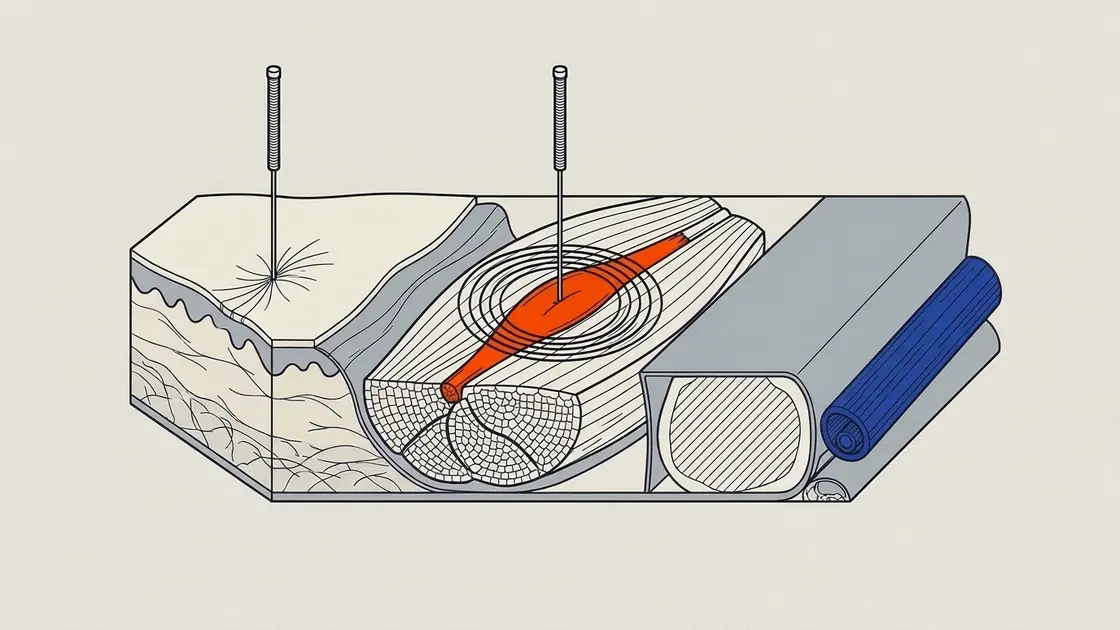
Dermal & fascial collagen coupling
A solid non-cutting filiform needle (0.25 mm rounded tip) enters via perpendicular insertion (90°), gently tenting loose areolar collagen fibers without slicing dermal vessels.
Myofascial spindle & Aδ / C transduction
Within the calibrated depth target window at EX-HN15, mechanical coupling recruits intramuscular mechanoreceptors, increasing local micro-perfusion and releasing taut bands.
Deep neurovascular clearance
Calibrated angle and depth keep the needle tip clear of periosteum and deep neurovascular trunks, pairing targeted stimulation with anatomical safety.
EX-HN15 in research
How many Library studies cite this point, since when, and with which designs and verdicts.
- Studies
- 1Library study cites EX-HN15
- By year
- 2022
- Verdict
- Strong1
- Study designs
- RCT1
- Classical source
- Zhen Jiu Ji Cheng
Each study counts once, under the most specific design it states. The verdict is the Library’s word for the strength of each study’s evidence.
See the numbers: EX-HN15 in research
| Year | Studies |
|---|---|
| 2022 | 1 |
Often appears with
Points the Library studies cite together with EX-HN15. It shows research practice, not a prescription.
Each filled mark stands for 5 studies; an open mark, for 1 to 4.