EX-HN13 Yu Ye () — Yu Ye — Jade Fluid
On the ventral surface of the tongue, on the sublingual vein to the right of the lingual frenulum
Anatomical illustration acupuntura.com · verified against Focks (2008), WHO/WPRO (2008), and Pontos e Meridianos
Anatomical location
In the oral cavity, on the vein on the right side of the lingual frenulum. (Fig. 12.7)
Practical palpation guide
With the tip of the tongue raised, locate the points bilaterally to the lingual frenulum. On the left side is Jin Jin (EX-HN12); on the right, Yu Ye (EX-HN13).
Medical application & myofascial correlation
Clinical synthesis
The Zhen Jiu Da Cheng indicates combination with Lian Quan (CV-23), which treats tongue edema and motor aphasia; with Cheng Jiang (CV-24), which treats symptoms of diabetes; and with Lian Quan (CV-23) and Feng Fu (GV-16), which treats altered tongue motility. These two points are frequently used to treat muteness, glossopharyngeal nerve palsy and laryngitis.
Clinical practice indications
- 01Aphthae
- 02Tongue edema
- 03Sore throat
- 04Symptoms of diabetes
- 05Jaundice
- 06Vomiting
- 07Diarrhea
- 08Acute throat infection
- 09Tonsillitis and motor aphasia
- 10The Zhen Jiu Da Cheng indicates that combination with:
- 11* Lian Quan (CV-23) – treats tongue edema and motor aphasia
- 12* Cheng Jiang (CV-24) – treats symptoms of diabetes and
- 13* Lian Quan (CV-23) and Feng Fu (GV-16) – treats altered tongue motility
- 14These two points are frequently used to treat muteness
- 15Glossopharyngeal nerve palsy and laryngitis
Presenting symptoms & complaints
Classical tradition, channel actions & source
Traditional indications (TCM)
Functional classification
Layered tissue anatomy & needle biomechanics at EX-HN13
Cross-sectional technical schematic of perpendicular insertion (90°) (calibrated depth): superficial connective collagen coupling, intramuscular myofascial transduction, and deep neurovascular protection.
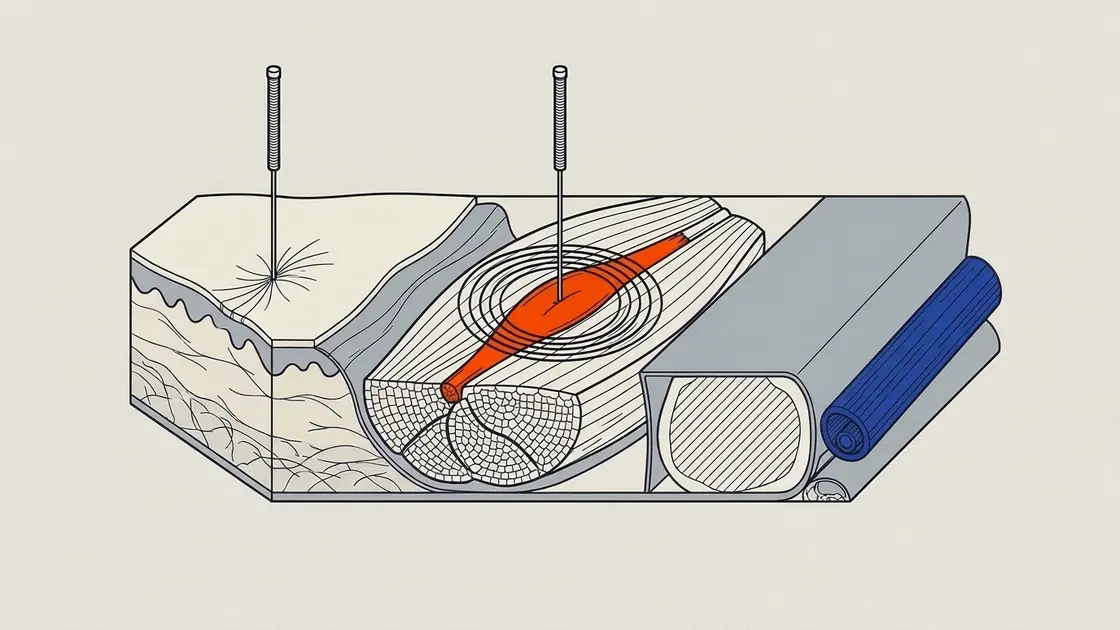
Dermal & fascial collagen coupling
A solid non-cutting filiform needle (0.25 mm rounded tip) enters via perpendicular insertion (90°), gently tenting loose areolar collagen fibers without slicing dermal vessels.
Myofascial spindle & Aδ / C transduction
Within the calibrated depth target window at EX-HN13, mechanical coupling recruits intramuscular mechanoreceptors, increasing local micro-perfusion and releasing taut bands.
Deep neurovascular clearance
Calibrated angle and depth keep the needle tip clear of periosteum and deep neurovascular trunks, pairing targeted stimulation with anatomical safety.