EX-HN9 Nei Ying Xiang () — Nei Ying Xiang — Inner Welcome Fragrance
Anatomical location
In the nasal cavity, at the junction between the mucosa of the nasal ala cartilage and the nasal concha. (Fig. 12.5)
Practical palpation guide
Locate the point at the upper end of the intranasal mucosa, at the junction of the nostril cartilage with the nasal muscle.
Medical application & myofascial correlation
Clinical practice indications
- 01Burning sensation in the eyes
- 02Severe headache
- 03Heat stroke
- 04Fever
- 05Nasal disorders
- 06Sore throat and vertigo
Presenting symptoms & complaints
Classical tradition, channel actions & source
Traditional indications (TCM)
Functional classification
Layered tissue anatomy & needle biomechanics at EX-HN9
Cross-sectional technical schematic of perpendicular insertion (90°) (calibrated depth): superficial connective collagen coupling, intramuscular myofascial transduction, and deep neurovascular protection.
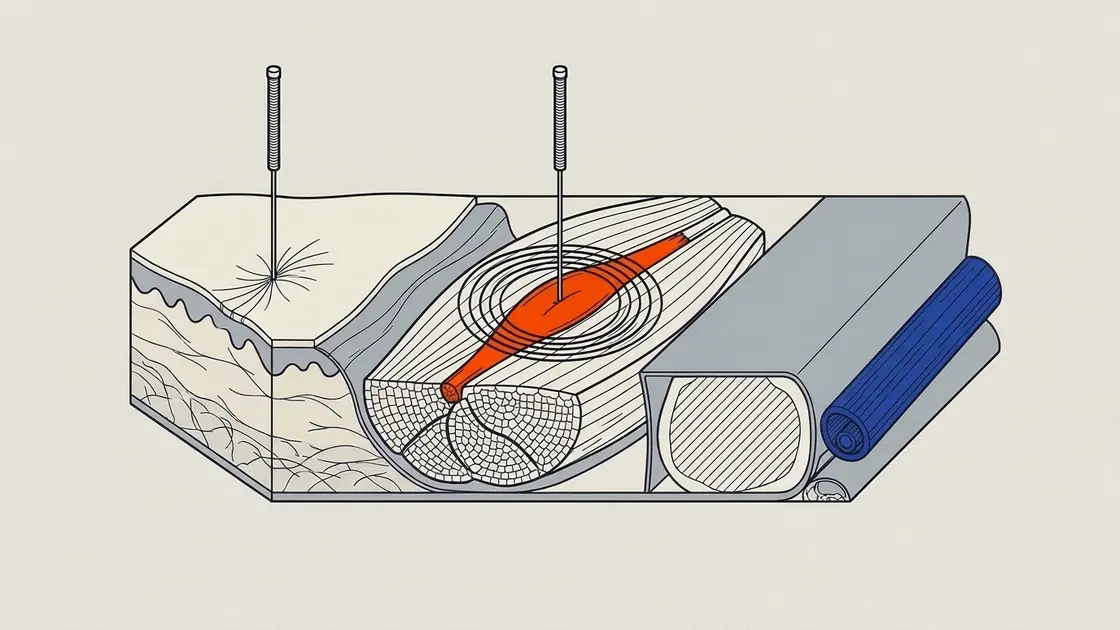
Dermal & fascial collagen coupling
A solid non-cutting filiform needle (0.25 mm rounded tip) enters via perpendicular insertion (90°), gently tenting loose areolar collagen fibers without slicing dermal vessels.
Myofascial spindle & Aδ / C transduction
Within the calibrated depth target window at EX-HN9, mechanical coupling recruits intramuscular mechanoreceptors, increasing local micro-perfusion and releasing taut bands.
Deep neurovascular clearance
Calibrated angle and depth keep the needle tip clear of periosteum and deep neurovascular trunks, pairing targeted stimulation with anatomical safety.
EX-HN9 in research
How many Library studies cite this point, since when, and with which designs and verdicts.
- Studies
- 1Library study cites EX-HN9
- By year
- 2013
- Verdict
- Moderate1
- Study designs
- Other designs1
- Classical source
- Zhen Jiu Da Cheng
Each study counts once, under the most specific design it states. The verdict is the Library’s word for the strength of each study’s evidence.
See the numbers: EX-HN9 in research
| Year | Studies |
|---|---|
| 2013 | 1 |
Often appears with
Points the Library studies cite together with EX-HN9. It shows research practice, not a prescription.
Each filled mark stands for 5 studies; an open mark, for 1 to 4.