BL-55 Heyang (合陽) — He Yang
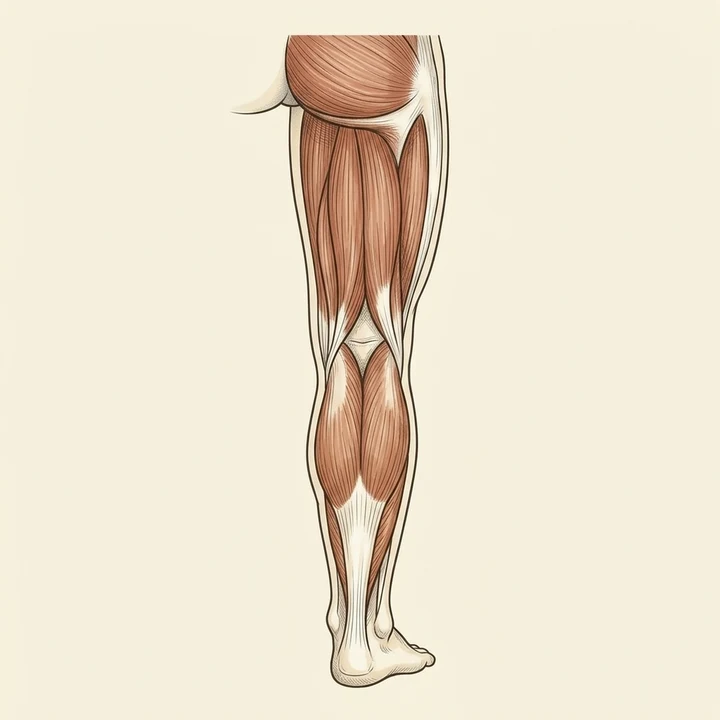
On the posterior aspect of the leg, 2 cun directly inferior to BL-40, between the medial and lateral heads of the gastrocnemius muscle.
In ventral decubitus or seated with the foot in plantar flexion, locate the point 2 cun immediately below Wei Zhong (BL-40).
Gastrocnemius muscle. The tibial nerve and the popliteal artery and vein lie deep.
Perpendicular insertion, 0.7–1.0 cun.
Medical application & myofascial correlation
Clinical synthesis
1. According to the principle that a point can treat disorders manifested along the course of its own meridian, this point is indicated for the treatment of disorders of the spine and lower limbs. 2. The Bladder Meridian, Foot Tai Yang, connects with the brain, the spine, the dorsal region, and the gluteal region through its collateral branches; the point may therefore be used to treat disorders of the head, epilepsy, and clonic convulsion. 3. The Bladder Meridian, Foot Tai Yang, and the Kidney Meridian, Foot Shao Yin, are coupled meridians. The Shen (Kidney) controls reproduction, so the point may also be indicated for the treatment of disorders of the reproductive system.
Clinical practice indications
- 01Gastrocnemius strain
- 02Sciatica
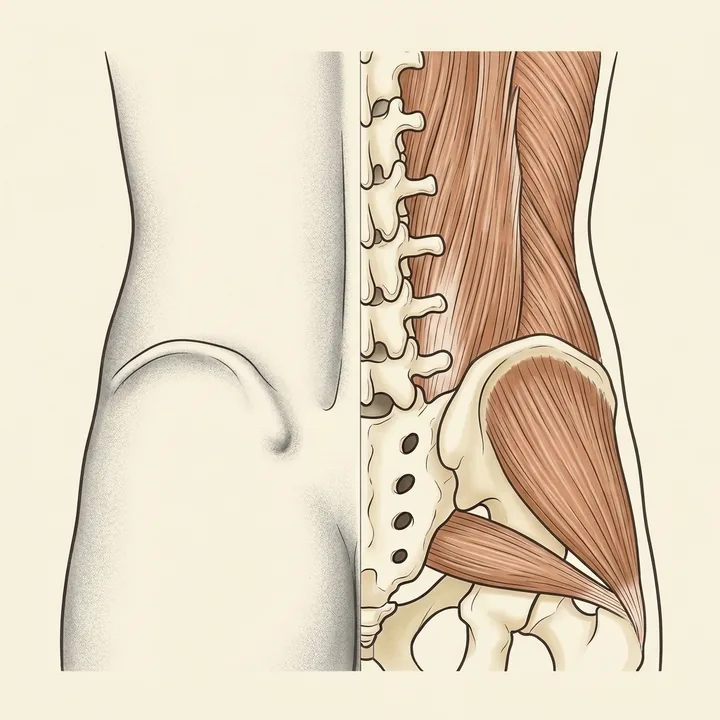
- 03Acute low back pain
Presenting symptoms & complaints
Classical tradition, channel actions & source
Classical therapeutic actions
- Activates the channel
- Relieves pain
- Stops bleeding
- Treats acute lumbar sprain
Traditional indications (TCM)
Character etymology
He (合), confluence; Yang (阳), the Yang of Yin-Yang. The meridian, from the nape, descends and divides into two branches, reuniting at Wei Zhong (BL-40). He Yang (BL-55) lies below Wei Zhong (BL-40).
Layered tissue anatomy & needle biomechanics at BL 55
Cross-sectional technical schematic of perpendicular insertion (90°) (0.7–1 cun): superficial connective collagen coupling, intramuscular myofascial transduction, and deep neurovascular protection.
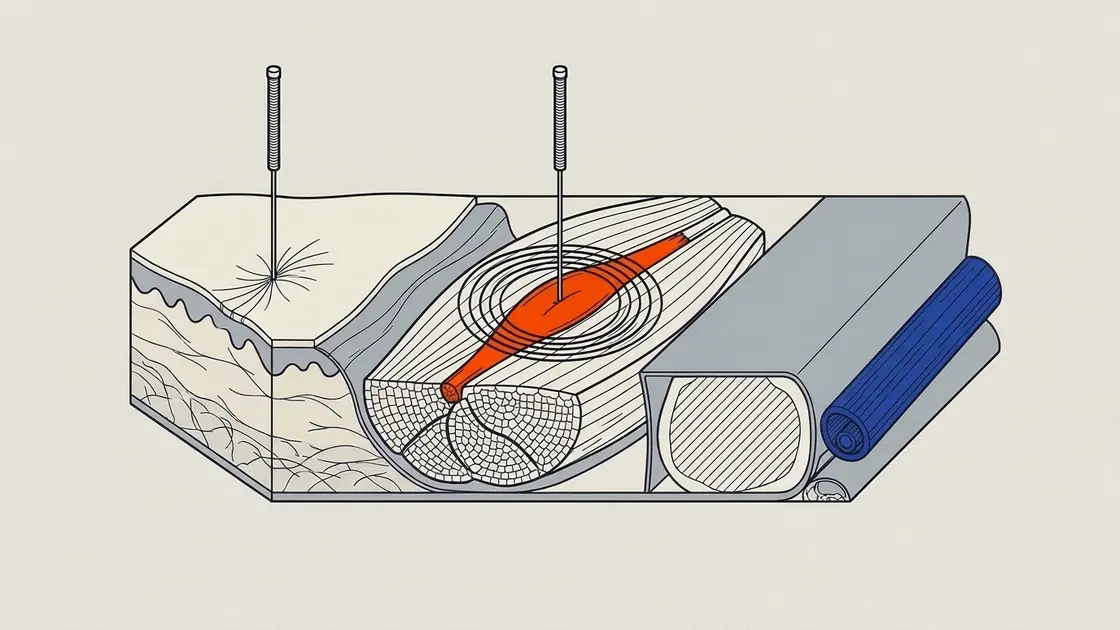
Dermal & fascial collagen coupling
A solid non-cutting filiform needle (0.25 mm rounded tip) enters via perpendicular insertion (90°), gently tenting loose areolar collagen fibers without slicing dermal vessels.
Myofascial spindle & Aδ / C transduction
Within the 0.7–1 cun target window at BL 55, mechanical coupling recruits intramuscular mechanoreceptors, increasing local micro-perfusion and releasing taut bands.
Deep neurovascular clearance
Calibrated angle and depth keep the needle tip clear of periosteum and deep neurovascular trunks, pairing targeted stimulation with anatomical safety.
Clinical relations & channel protocols
Immediate neighbors on the meridian
Related clinical reading
6Understand sciatic pain — its causes, mechanisms, diagnosis, and evidence-based treatment options.
Understand dysmenorrhea — the menstrual pain affecting millions of women — including its physiologic mechanisms, differential diagnosis, and evidence-based treatment options.
Understand the causes, symptoms, and treatments for pain in the lumbar region — one of the most common complaints in clinical practice.
Understand lumbar radiculopathy — compression of lumbar nerve roots causing sciatica, numbness, and weakness in the lower limbs.
Understand the motor sequelae of stroke — hemiparesis, spasticity, and movement dysfunctions, their recovery mechanisms, and the fundamental role of rehabilitation.
Understand premenstrual syndrome — a set of cyclical physical and emotional symptoms that affect quality of life, its mechanisms, and evidence-based therapeutic options.